2026-08-26 · Ally Bennett
Icicles and Ice Dams: What WNDU and South Bend Fire Saw in the Deep Freeze
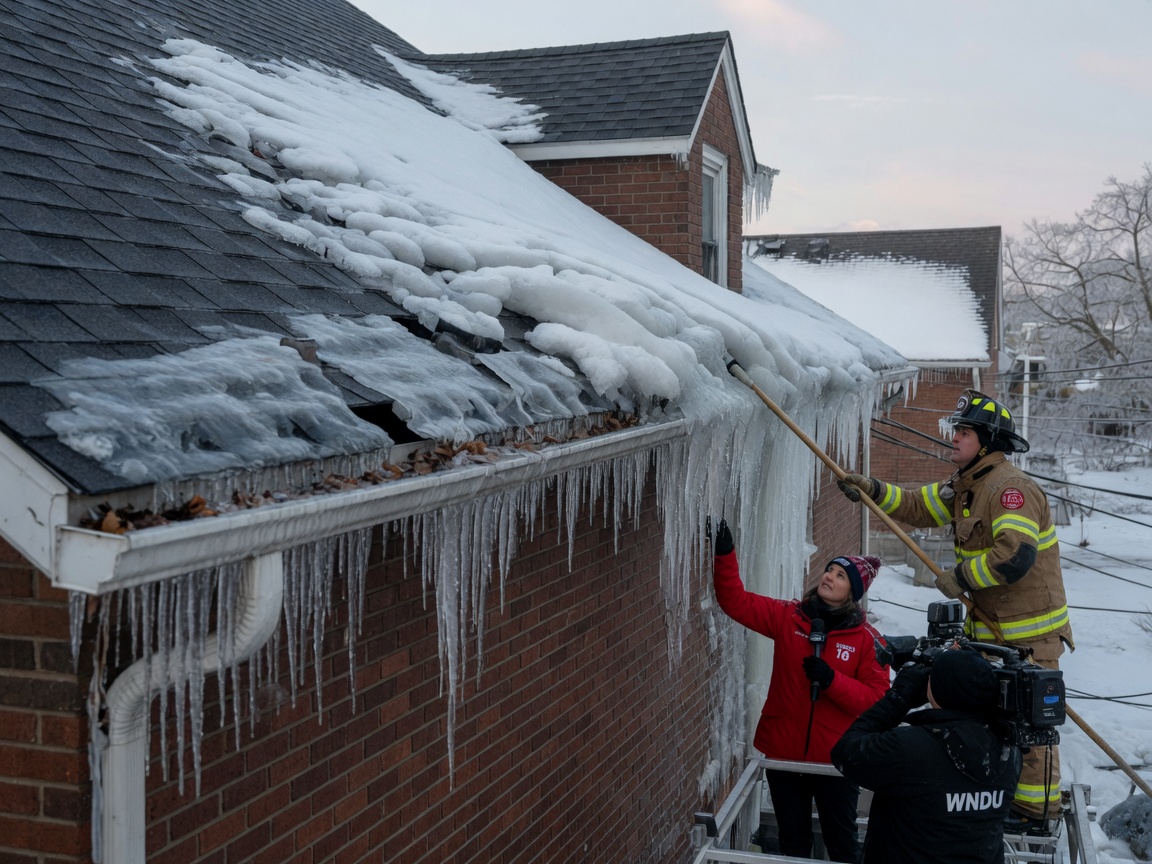
WNDU Feb 5 coverage and South Bend Fire 911 logs recorded multiple calls about 3–5 ft icicles falling from eaves during the deep freeze, with crews noting that such formations signal ice dams forming where meltwater refreezes at the roof edge and backs up under shingles.
Ice Dam Formation in South Bend Winters
ABC57 Jan 30 reporting on local ice dams pointed to older homes lacking proper attic ventilation as the main factor, where daytime melt followed by nighttime freeze at the eaves creates the classic dam. WSBT Jan 22 coverage added that homes without ice-and-water shield under the shingles allow ice to push water beneath the roof deck, leading to leaks in areas such as Rum Village and River Park. These conditions match the humid continental climate with lake-effect snow that drops around 64.5 inches annually on St. Joseph County roofs. Homeowners in Howard Park and Near Northwest see the same pattern when gutters fill with ice jams that trap water against the roofline.
What Firefighters and News Crews Observed
WNDU interviews with Mike Scott of BluSky described gutter ice jams forming alongside the 3–5 ft icicles, prompting 911 responses when chunks detached and struck sidewalks or vehicles below. The reports tied these events directly to prolonged cold snaps that prevent full drainage, a common sight along the St. Joseph River north bank and near Eddy Street Commons. Crews responded to calls from Downtown South Bend and West Side addresses where heavy snow loads from prior storms had already stressed older roofing. The coverage emphasized that the icicles themselves were not the leak source but visible proof of the hidden ice dam holding water against the shingles.
Local Storm Context and Inspection Needs
ABC57 Mar 11 reporting on the March 10 storms that brought wind, rain, and large hail to Topaz Street and Opal Street showed how prior damage can worsen ice-dam leaks once temperatures swing. After those events, roof inspection becomes essential to spot missing granules or lifted edges before the next freeze. The NWS survey of Lydick and German Township north of SBN, which noted possible tree-on-house impacts along Auten Road without confirming a tornado, further stressed checking flashing and underlayment on homes that may have sustained hidden stress.
Practical Steps After the Deep Freeze
Once temperatures moderate, check for water stains in attics near the eaves and look for sagging shingles along the roof edge. Ice dam roof repair crews at Ally Roofing, based at 2339 Basin St, South Bend, IN 46614, handle these issues during posted hours of Mon–Sat 8am–9pm and Sun 9am–6pm, closed holidays, using targeted removal and membrane upgrades rather than full replacement. Readers can also review the related post Ice Dams After South Bend's January Snow: Why Roofs Leak at the Eaves for additional neighborhood examples. For wind or hail follow-up, the post After the March 10 Hail and Wind: How to Inspect a South Bend Roof outlines a checklist that pairs well with post-freeze checks in Keller Park and Howard Park.
When to Schedule Targeted Repairs
If stains appear or granules collect in gutters after the thaw, roof leak repair focused on the eaves prevents escalation into interior damage. Ally Roofing serves Rum Village and River Park with owner-operated service that lets customers inspect workmanship on site. Addressing the ventilation gaps noted in the ABC57 report or adding shield where WSBT identified missing protection keeps future ice dams from forming during the next cold stretch.